P1114
CIRCUIT DESCRIPTION
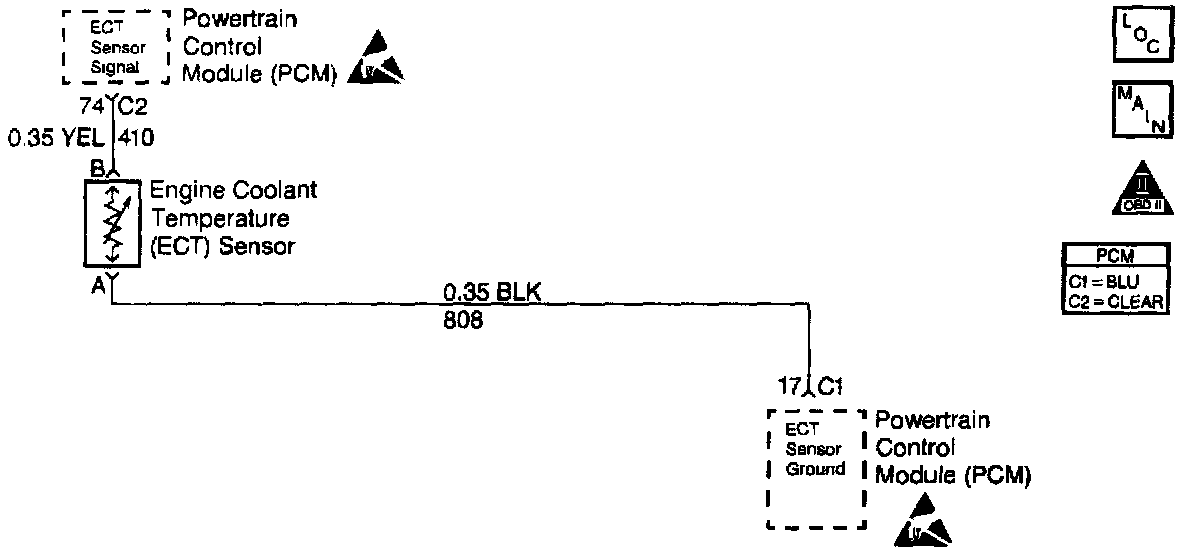
The Engine Coolant Temperature (ECT) sensor is a thermistor, a sensor whose resistance varies with temperature. The ECT sensor signal is on CKT 410 and sensor ground on CKT 808. As the temperature increases, sensor resistance decreases. High coolant temperature will result in low signal voltage on CKT 410. If the ECT reading is 151°C (304°F) or higher, The PCM sets DTC P1114.
CONDITIONS FOR SETTING THE DTC
Test Conditions
^ DTCs P0112, P0113, P0117 and P0118 not set.
^ IAT temperature of 110°C (230°F) or less.
OR
^ DTCs P0117, P0118, P0122 and P0123 not set.
^ Engine running and throttle angle between 5 and 35 degrees for at least 3.5 minutes.
Failure Condition
ECT 151°C (304°F) or more.
ACTION TAKEN WHEN THE DTC SETS
^ The Malfunction Indicator Lamp (MIL) will not illuminate.
^ No message will be displayed.
CONDITIONS FOR CLEARING THE DTC
^ A History DTC will clear after forty consecutive warm-up cycles with no failures of any non-emission related diagnostic test.
^ A Last Test Failed (current) DTC will clear when the diagnostic runs and does not fail.
^ PCM battery voltage is interrupted.
^ Using a Scan tool.
DIAGNOSTIC AIDS
If a faulty sensor is suspected refer to Temperature vs Resistance table.
If fault is not present perform Powertrain Ground Check and also review Failure Rec. to determine conditions under which and how long ago the DTC set.
TEST DESCRIPTION
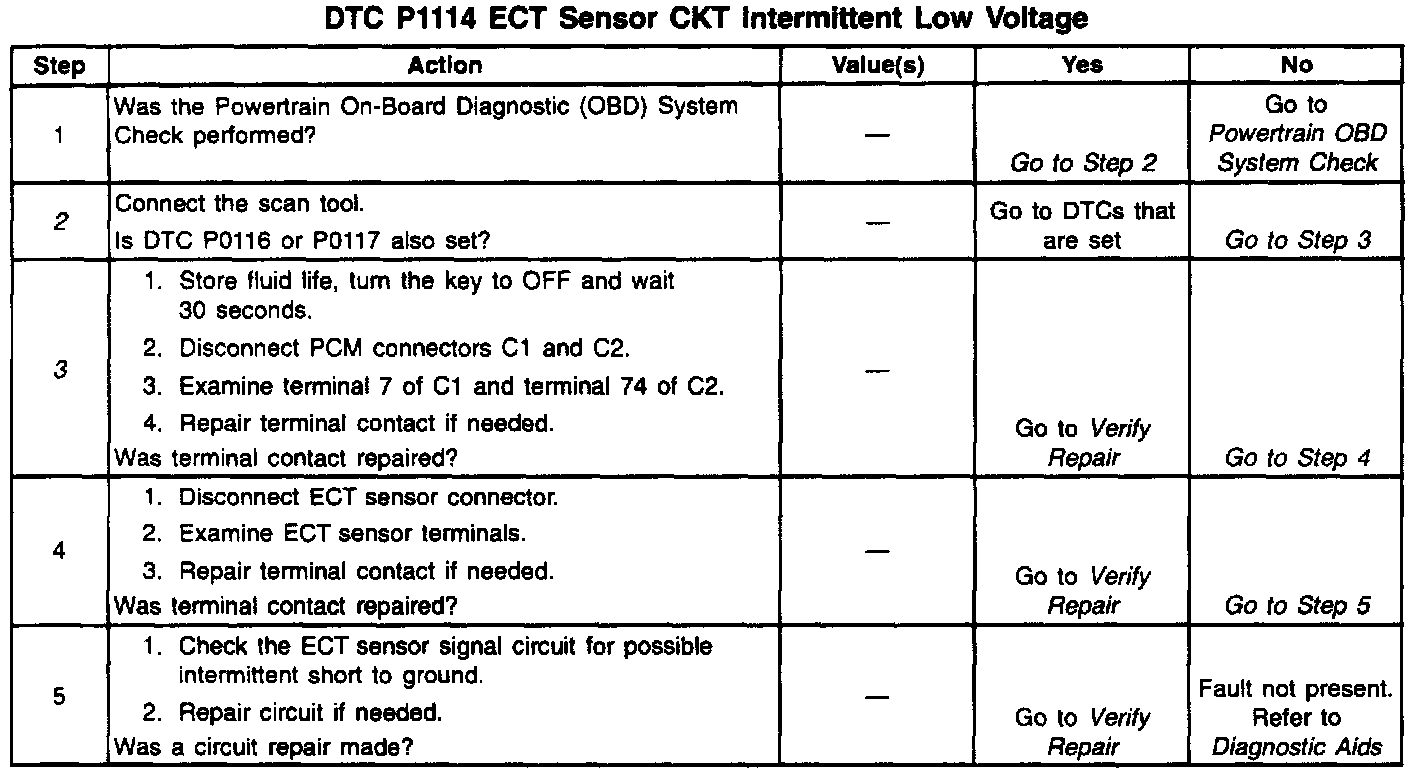
Number(s) below refer to the step number(s) on the Diagnostic Table.
2. If DTC P0116 is also set, diagnose it first because it may help to pinpoint a faulty ECT sensor.
3. Checking for an intermittent short to ground in the ECT sensor signal circuit that may be causing a low ECT signal.