Use and Construction of A Noise Sniffer
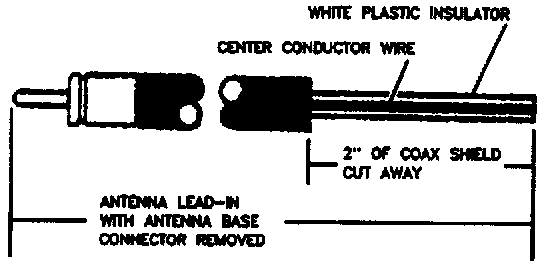
Antenna Sniffer:
Checking For Noise On A Wire:
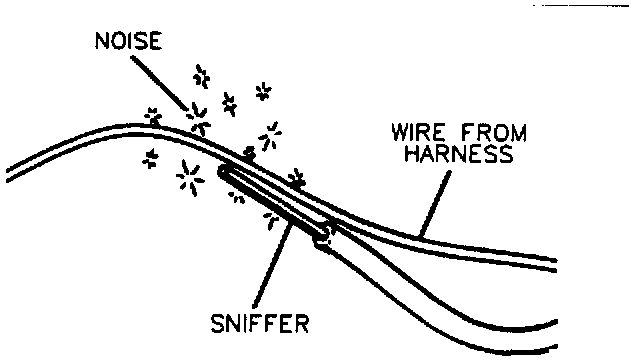
The antenna sniffer can be used along with the vehicle's Radio to locate "hot spots" which are generating Radio noise interference. These "hot spots" can be found in the harnesses, in the upper part of the dash or even between the hood and windshield.
The sniffer can be made from an old piece of antenna lead-in from a mast or power antenna. The longer the lead-in the better.
Make the antenna sniffer as shown in Antenna Sniffer illustration. The 2 inch section with the black coating and braided shield stripped back becomes the antenna when the sniffer is plugged into the Radio's antenna socket. It can then be used to probe and search out "hot spots."
To use the noise sniffer:
1. While listening to the complaint noise, disconnect the antenna and plug the sniffer into the antenna socket.
2. Turn the Radio volume up.
3. Search for the noise source, keeping fingers off the 2 inch probe.
When checking for noise on a wire, the best results will be achieved when the sniffer if placed parallel to wire.