Master Cylinder Overhaul
Compact Master Cylinder:
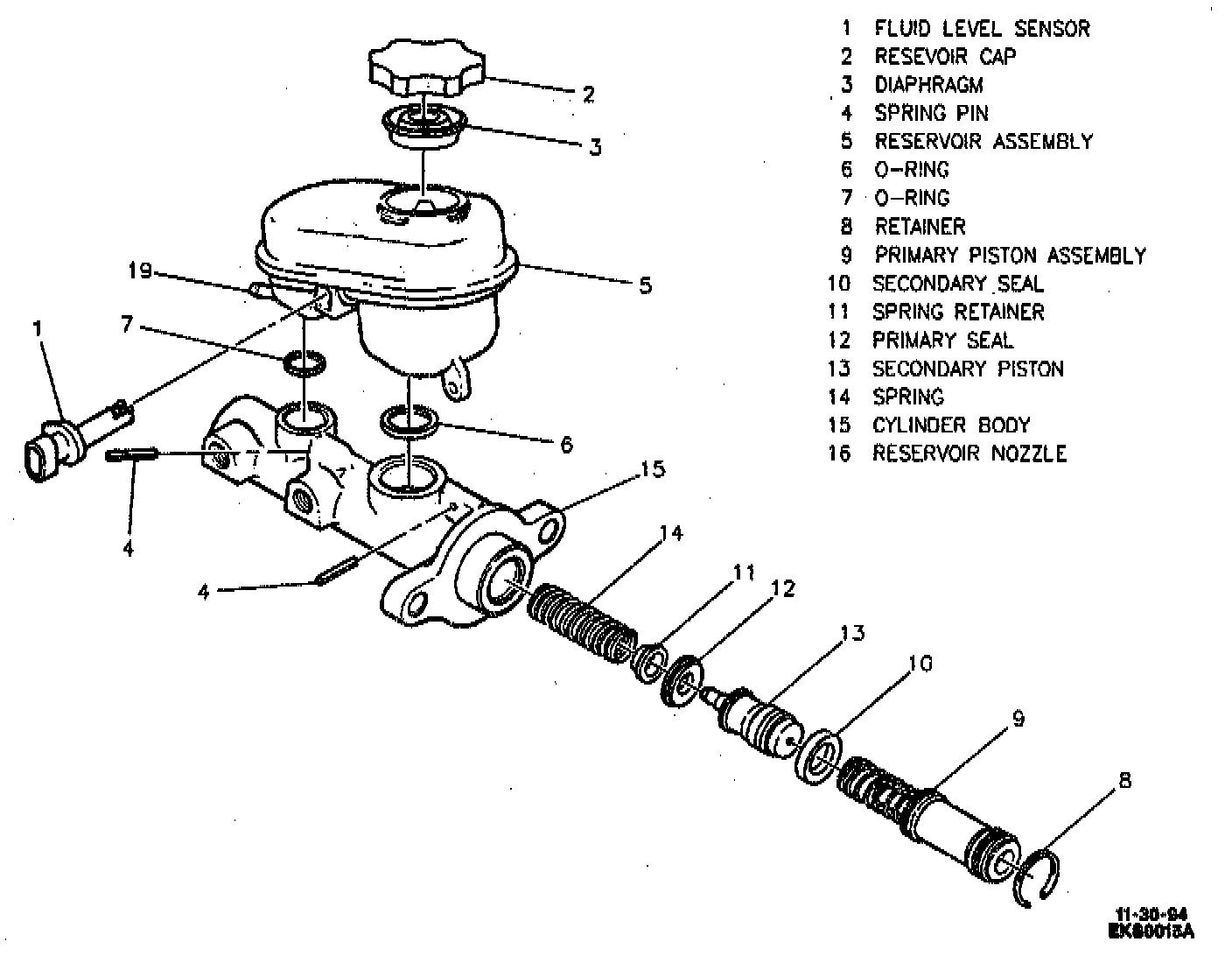
NOTE: Reservoir cap and diaphragm can be inspected and/or serviced without removing the master cylinder from the vehicle.
REMOVE OR DISCONNECT
1. Master cylinder from vehicle. Wipe reservoir cap clean before removing.
2. Reservoir cap and diaphragm. Inspect Reservoir cap and diaphragm for cuts, cracks, nicks, and deformation.
DISASSEMBLE
1. Fluid level sensor switch.
2. Retainer while depressing primary piston assembly. Take care not to damage the piston, bore, or retainer groove.
3. Apply low pressure unlubricated compressed air into outlet port at blind end of bore (other outlet port plugged) to remove:
- Primary piston assembly.
- Secondary piston.
- Spring.
- Spring retainer.
4. From secondary piston:
- Seals.
- Spring retainer. Inspect Master cylinder bore for scoring or corrosion. If noted, replace master cylinder. No abrasives should be used in bore. Clean All parts in clean, denatured alcohol. Dry with unlubricated compressed air.
NOTE: To ease reassembly, lubricate parts with clean brake fluid.
ASSEMBLE
1. Lubricated seals and spring retainer onto secondary piston.
2. Spring and secondary piston assembly into cylinder bore.
3. Lubricated primary piston assembly into cylinder bore.
4. Retainer while depressing primary piston assembly.
5. Diaphragm into reservoir cap and install on reservoir.
INSTALL OR CONNECT
1. Master cylinder into vehicle.