Coolant Reservoir: Description and Operation
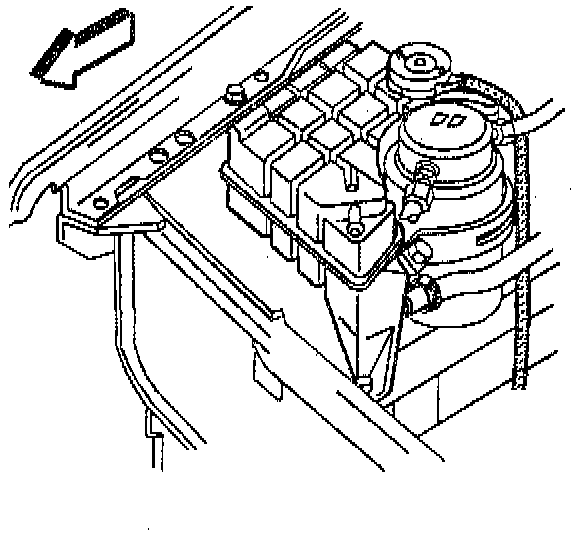
TANK
A plastic surge tank connects to the cooling system with two hoses. During vehicle use, the coolant heats and expands. The coolant displaced by this expansion flows to the surge tank. The tank mounts at a point higher than all of the other coolant passages in order to provide air bleed for the system. The surge tank contains a coolant level sensor at the bottom of the tank. When the coolant in the system falls below the recommended level, a message of CHECK COOLANT LEVEL displays on the Driver Information Center (DIC).
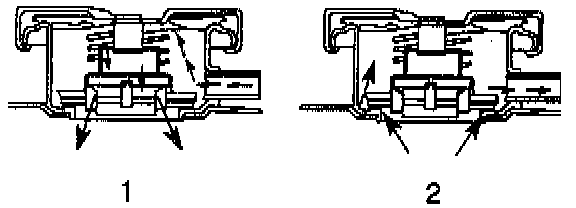
TANK CAP
The surge tank uses a plastic pressure-vent cap to allow a buildup of pressure in the cooling system. The cap allows the system to operate at a higher than atmospheric pressure. This pressure raises the boiling point of the coolant. The pressure-type cap contains a blowoff (pressure) valve (2) and a vacuum (atmospheric) valve (1). The cap protects the radiator by relieving any pressure that exceeds design limits. In order to prevent radiator collapse, caused by vacuum as the engine cools, the vacuum valve prevents excessive pressure differences from occurring between the cooling system and the atmosphere.